

Highlights
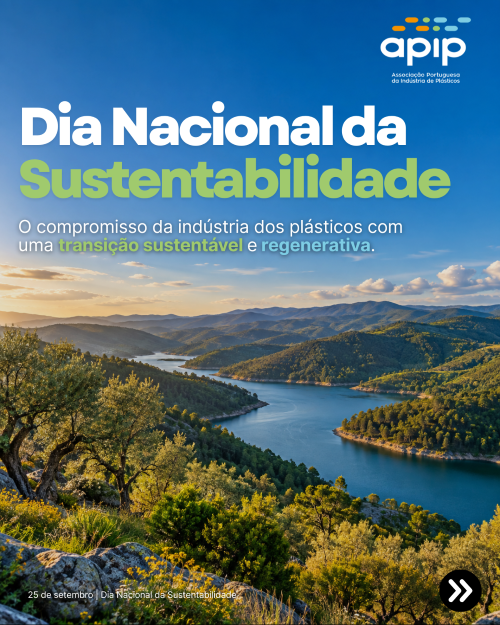
National Sustainability Day
September 25, 2026
Sustainability is no longer just a vision for the future. It is a transformation that is already taking place - and the plastics industry is part of it.
In Europe, the path forward is clear: decarbonize the economy, use resources more efficiently, promote circularity, and rethink the way we design, produce, use, and recover value from products. For the plastics industry, this transition presents concrete challenges, but also opportunities to innovate and create value:
- Greater circularity, by promoting reuse, recycling, and the incorporation of secondary raw materials. And, whenever possible, regenerating resources so they can generate value again.
- Fewer emissions, through energy efficiency, technological innovation, and the decarbonization of industrial processes;
- Better design, with products and packaging designed from the outset for greater durability, reuse, and recyclability;
- New requirements for packaging, under the new European Regulation on Packaging and Packaging Waste (PPWR);
- More innovation, by developing materials, processes, and solutions capable of addressing environmental challenges and the needs of society.
Sustainability requires more than just goals. It requires knowledge, investment, innovation, and collaboration throughout the entire value chain.
At APIP, we believe that a sustainable transition must be built on knowledge and evidence, transforming challenges into concrete solutions for industry and society.
Improve Design. Improve Production. Improve Circularity. Regenerate Resources.
Because the future doesn’t just depend on using less.
It depends on using resources better, preserving their value, and seeking to regenerate them for the future.